Two pieces ago we measured the bundle conversion funnel. Last week we broke down what those converting bundles look like. This week we close the loop with the question merchants ask once they have a working bundle: when do the orders actually come in? Across 12,270 bundle-attributed orders on Turbo Bundles over 16 months, we mapped every order to a clock, plotted it, and pulled out the windows worth scheduling around. The pattern is more concentrated than we expected and the weakest day is not the one most merchants would guess.
TL;DR — four numbers worth memorising
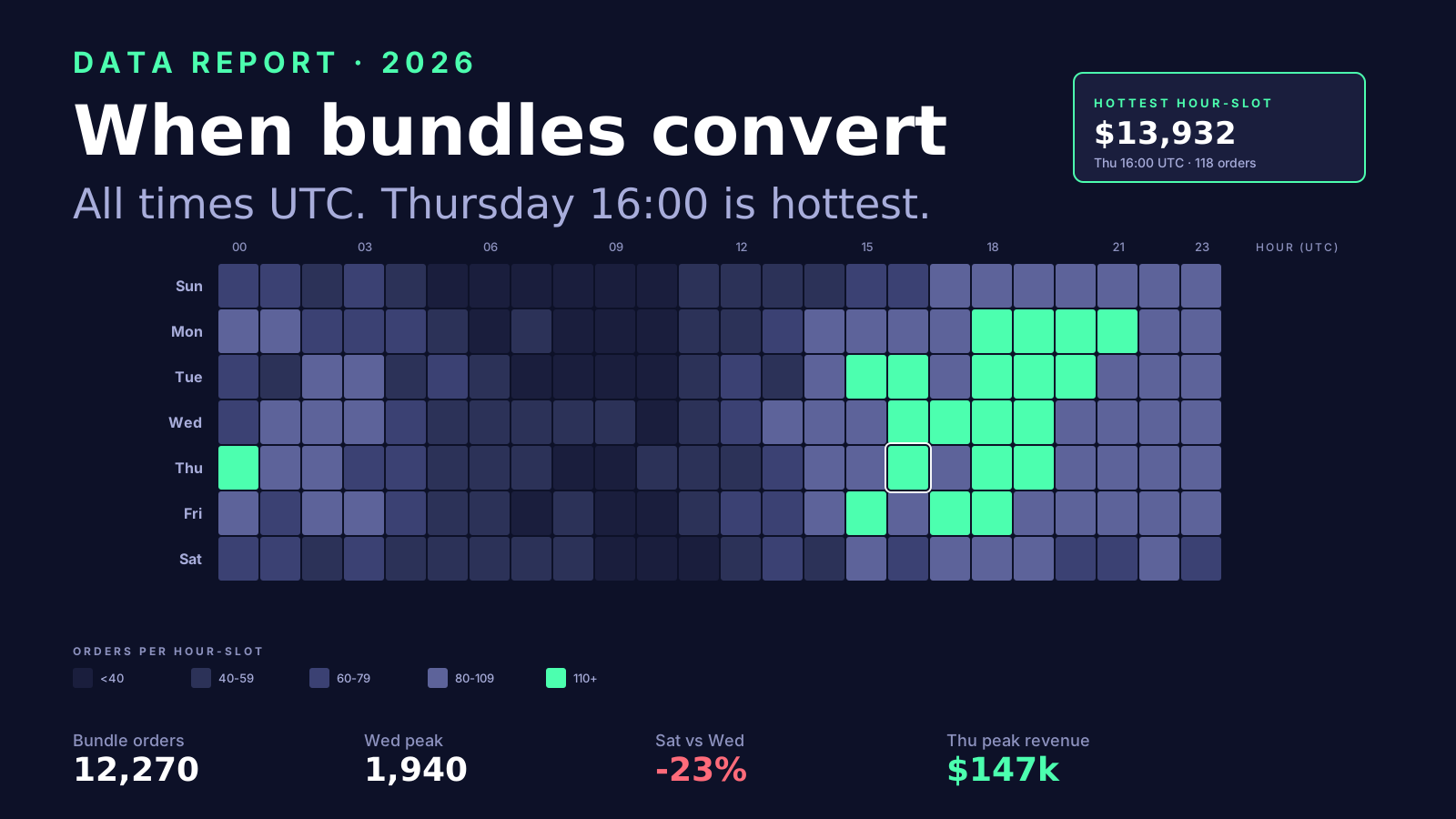
- Thursday 16:00 UTC is the single hottest hour-slot of the week: $13,932 in attributed revenue from 118 orders, more than any other hour-by-day cell in our 16-month window.
- The 15:00 to 21:00 UTC band concentrates 41% of all bundle orders. Six hours hold almost half of every bundle-attributed order we’ve ever served.
- Saturday is the weakest weekday for bundles: 1,493 orders, 23% below Wednesday’s 1,940. Sunday is the second weakest. Mid-week and Friday cluster at the top, not the weekend.
- 44% of converting shops produce their first bundle-attributed order within 7 days of installing. If you make it past the first month with zero bundle orders, the odds shift — but a small long-tail cohort still converts 90+ days after install.
The one important caveat upfront: every timestamp below is UTC. We don’t record shop-side timezone on incoming orders today, so we can’t cleanly translate the heatmap into local time. The 16:00 UTC peak is morning in the US, late afternoon in Europe, late evening in South-East Asia. We’ll come back to what that probably means about who’s buying when, but please don’t read this as "set your campaign to fire at 4 PM your local time" — read it as "this is when the platform-aggregate demand peaks, regardless of where the shopper sits".
The 24-hour bundle clock — six hours hold half the demand
Look at the heatmap above. The mint and lighter-blue cells — the ones where order volume crosses 80 per hour — cluster heavily in a 6-hour band from 15:00 to 21:00 UTC, Monday through Friday, with the peak on Wednesday and Thursday afternoons. Saturday and Sunday have the same shape (mint cells in the evening) but every cell is roughly 20% cooler than its weekday equivalent. The mornings (06:00 to 12:00 UTC) are uniformly cold across every day of the week.
The 41% concentration figure is real and worth dwelling on. If you collapse our 168 weekly hour-cells onto a histogram, the top 7 cells alone account for ~10% of every bundle order. The top 28 cells — one-sixth of the week — account for 41%. Adobe’s Digital Economy Index reports a similar concentration pattern across ecommerce broadly: shopping isn’t spread evenly across the day, it’s spread across a handful of "peak attention" windows. Our bundle data sits inside that broader pattern but has a noticeably tighter concentration than retail overall.
The mechanism is the same one every email-marketing benchmark report finds. Klaviyo’s 2025 send-time analysis shows the strongest open-and-click windows clustering around mid-afternoon in the major timezones. Bundles are a discretionary purchase — not a "I need toothpaste before I run out" stocking trip — and discretionary purchases happen when the shopper has unstructured attention. That’s the same window emails get opened. The implication for merchants is direct: schedule your bundle-promoting emails, paid traffic, and SMS pushes against the 15-21 UTC band, not against your local-time end-of-business-day.
The weekday pattern — why Saturday is the worst day for bundles
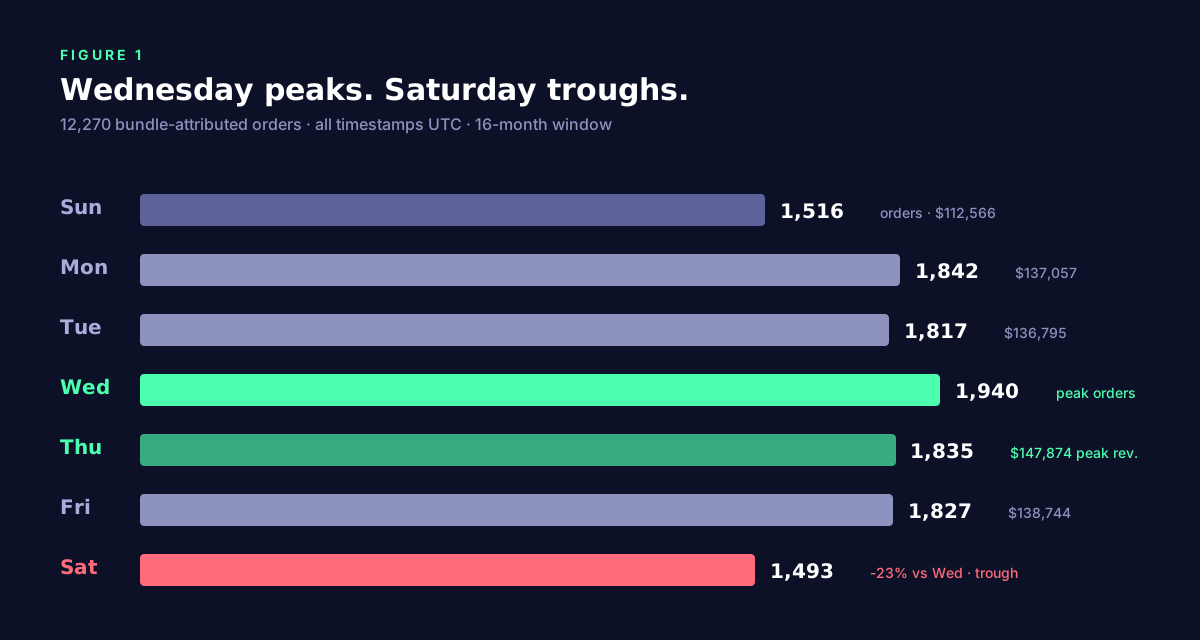
This is the chart that surprised us most when we ran the data. Saturday is the trough. Sunday is almost as cold. The five weekdays cluster tightly between 1,817 and 1,940 orders, with Wednesday on top by orders and Thursday on top by revenue. The "weekends are when people shop" assumption that comes out of every general-retail study does not hold for bundles on Shopify.
The most likely explanation is composition: who is the customer of a Shopify-store bundle? Predominantly someone shopping for a specific brand or niche, often on a mobile device, often during a workday lull or commute. The kind of leisurely browsing that defines weekend retail — a slow Saturday afternoon at the mall, a Sunday morning coffee-and-browse session — doesn’t map to bundle-specific intent. Bundles convert when a shopper is on a product page, considering a specific SKU, and gets nudged into a quantity-tier upgrade. That moment happens more often during the work week than during the weekend.
A second factor: bundle merchants’ own marketing schedules. Email campaigns, Meta ads, and influencer drops tend to fire mid-week, and those drive the impressions that the bundle widget converts. Saturday gets the residual organic traffic. The platform-aggregate pattern reflects merchant decisions as much as shopper preference, and most merchants have learned, intuitively, to push mid-week.
Practical implication: if you’re sequencing a launch, anchor it to Wednesday morning UTC. By the time the 15:00 UTC window opens that day, your email is in inboxes, your ads are warmed up, and the heatmap’s hottest 6-hour band is in front of you. A Saturday launch is the worst available choice; a Sunday launch is the second worst.
Monthly trajectory — the 2025-2026 ramp, and what BFCM 2025 told us
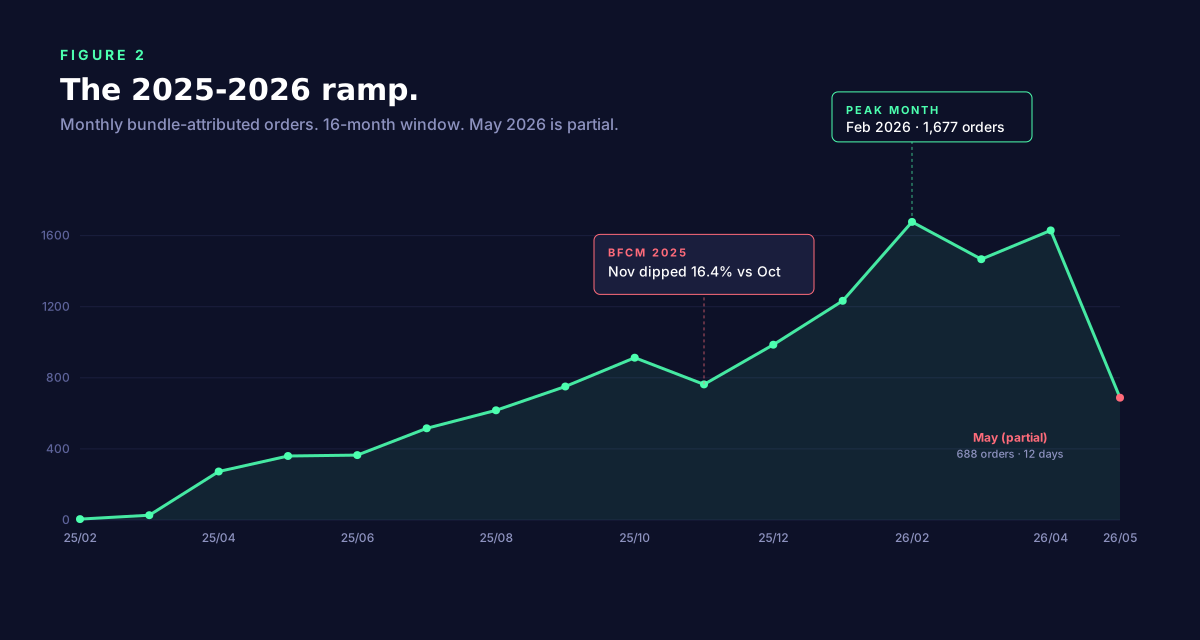
Reading a monthly chart of a new app is usually reading the install curve more than reading the shopper behaviour. From February 2025 (5 orders) through April 2025 (273), the trajectory is almost entirely "more shops installed Turbo Bundles". By mid-2025 the curve becomes a mix of compounding installs and meaningful per-shop volume. February 2026 is the first month where the chart is genuinely a shopper-behaviour signal and not a marketing-funnel signal: 1,677 orders, $111,927 in attributed revenue, our busiest month on record.
The most interesting datapoint is the BFCM-2025 dip. October 2025 was a healthy 913 orders. November 2025 came in at 763 — a 16.4% drop — despite that being the month of Black Friday and Cyber Monday. December recovered to 986 and the curve has been steeply up since. We’ve sat with this for a while and our read is that BFCM 2025 saw merchants funnel their attention into sitewide percent-off campaigns instead of bundle-specific promotions; the discount stack collapsed bundles out of consideration. Shopify’s own BFCM 2025 recap reported record platform GMV, so the broader shopping moment was healthy — we just didn’t see the bundle-specific lift inside it.
That’s a single year of evidence, so it’s not yet a trend. We’ll be watching BFCM 2026 closely — if November 2026 again under-indexes vs October 2026, "bundle promotions get squeezed during BFCM’s sitewide-discount overlap" becomes a real finding rather than a one-year anomaly. For now, the takeaway is narrower: don’t expect bundles to inherit the BFCM revenue lift the rest of your store gets, and consider whether your BFCM strategy actually wants bundles competing for the same discount-stack airtime as your storewide promo.
Onboarding curve — how long does it take a new shop to make its first bundle sale?
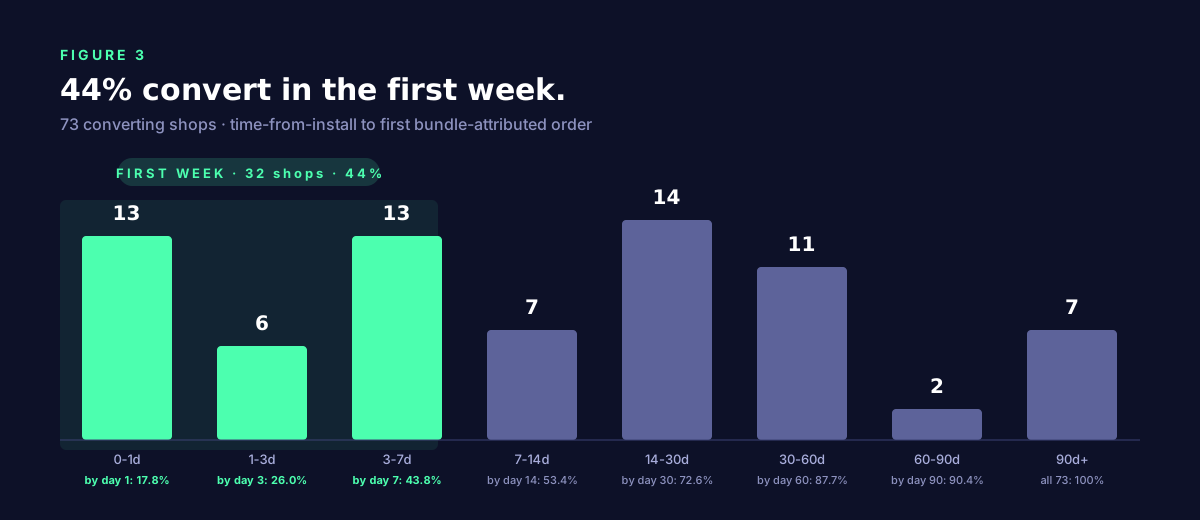
The onboarding curve is the surface answer to "how do I know if my bundle is going to work?" Forty-four percent of every shop that ever produced a bundle-attributed order did so within 7 days of installing. Of the 73 shops in this cohort, 32 made a sale in the first week. Half of those are same-day — install in the morning, configure a bundle, ship a sale by evening. The other half take a few days to publish their first bundle and see traffic.
The middle of the curve is the cohort that’s worth paying attention to. 7-14 days captures 7 more shops. 14-30 days captures another 14. By the 30-day mark, 73% of all eventual-converters have already had their first sale. A shop that installs, configures, and waits a month with zero bundle orders is starting to fall outside the "normal" onboarding pattern; the next step in that case is almost always a configuration review (visibility scope wrong, bundle on the wrong product, ladder shape mismatched to the product, see the Anatomy report for the playbook).
The long tail is real but small. Seven shops took more than 90 days to produce their first bundle sale. We looked at these individually and most of them are seasonal businesses — merchants who installed off-season and only saw bundle traction once their category’s buying window opened. If your category has strong seasonality, plan to install before the season opens; don’t panic if the first month is quiet.
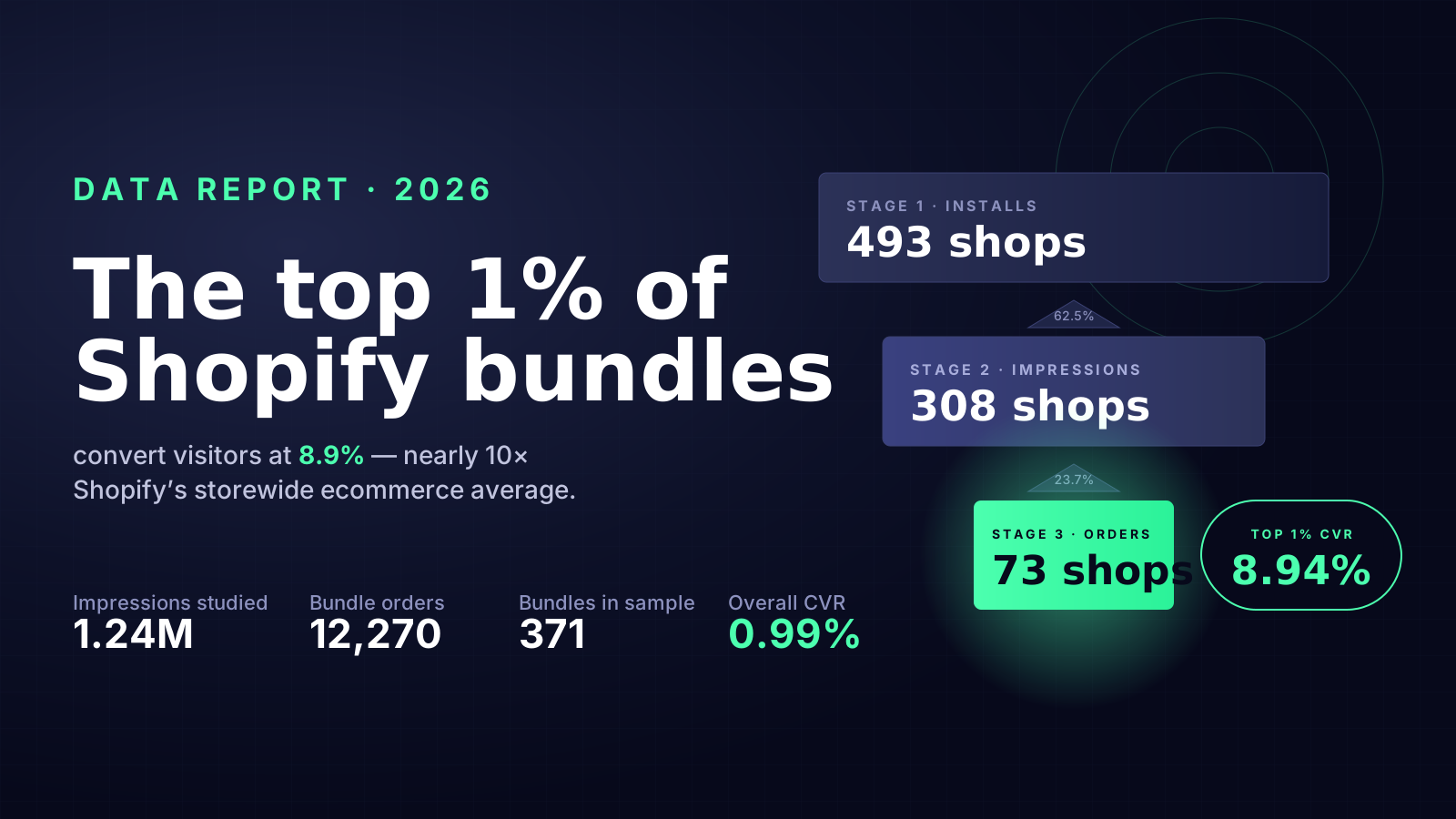
One important note: this cohort is only converting shops. The denominator is the 73 shops that have ever produced a bundle-attributed order, not the 493 shops that have ever installed. If you want the "what fraction of installs ever convert" answer, that’s 14.8% — see the Funnel report. This chart is "given that you’ll convert at all, how long does it take", which is the more actionable question once a shop has installed.
Operational implications — when to launch, when to discount, when to advertise
The actionable bits, in order of confidence:
- Anchor launch days to Wednesday or Thursday. Both are at-or-near peak on orders and revenue. Monday is a strong second-tier option if your team needs the early-week visibility to react.
- Time email and paid-traffic pushes for the 15-21 UTC window. That’s when 41% of attributed orders happen. The single hottest cell is Thursday 16:00 UTC; if you’re going to fire one campaign per week, fire it there.
- De-prioritise Saturday and Sunday for bundle-specific promos. They’re not zero, but they’re 20% below the weekday baseline. If you have a fixed weekly send budget, reweight against these days.
- Set yourself a 30-day onboarding checkpoint. If you’ve been live a month with no bundle-attributed orders, run the Anatomy playbook checklist before assuming the format doesn’t work for your shop.
- Don’t bank on BFCM lift for bundles. One year of data isn’t a trend, but the 2025 result suggests bundle revenue gets squeezed during sitewide-discount-stack events. Plan your BFCM bundle strategy on its own merits, not as a guaranteed seasonal multiplier.
Frequently asked questions
Everything in this article is UTC. How do I translate this to my local time?
You shouldn’t, exactly. The 16:00 UTC peak isn’t "16:00 in your store’s timezone" — it’s a platform-aggregate moment that reflects shoppers from many timezones simultaneously. 16:00 UTC is morning in the US East coast, late afternoon in Western Europe, evening in South-East Asia. If most of your customers are in one time band, you should expect your own peak to skew toward that band’s window. The best read of this article for a single-region merchant is "schedule against the time-of-day when your customers have unstructured attention", and use 15-21 UTC as a calibration point if your audience is genuinely global.
Should I run bundle promos on Saturdays at all?
Yes — just not as your headline launch day. Saturday has 1,493 orders over 16 months, which is a real chunk of revenue. The argument isn’t "skip Saturday" but "if you have a marketing budget that has to pick one day, Wednesday and Thursday will outperform Saturday by 23-30%". Already-running evergreen promos can keep running Saturdays.
How was the heatmap built?
For every bundle-attributed order, we read the UTC weekday and hour-of-day from the order’s placed-at timestamp and bucketed into the 168 hour-by-weekday cells. Then we summed orders and revenue per cell. Sample: 12,270 bundle-attributed orders across the full 16-month dataset. No timezone normalisation, no shopper-side timezone available.
Why don’t we have shopper timezone data?
Because the order webhook Shopify sends us doesn’t carry it. We get a merchant-side timestamp (the shop’s timezone, technically) on each order, but we store everything as UTC at write-time. Without shopper-side timezone enrichment, a "local time" version of this chart would just be a guess dressed up as data, so we’re only publishing the UTC view.
What about hour-of-day differences between bundle types?
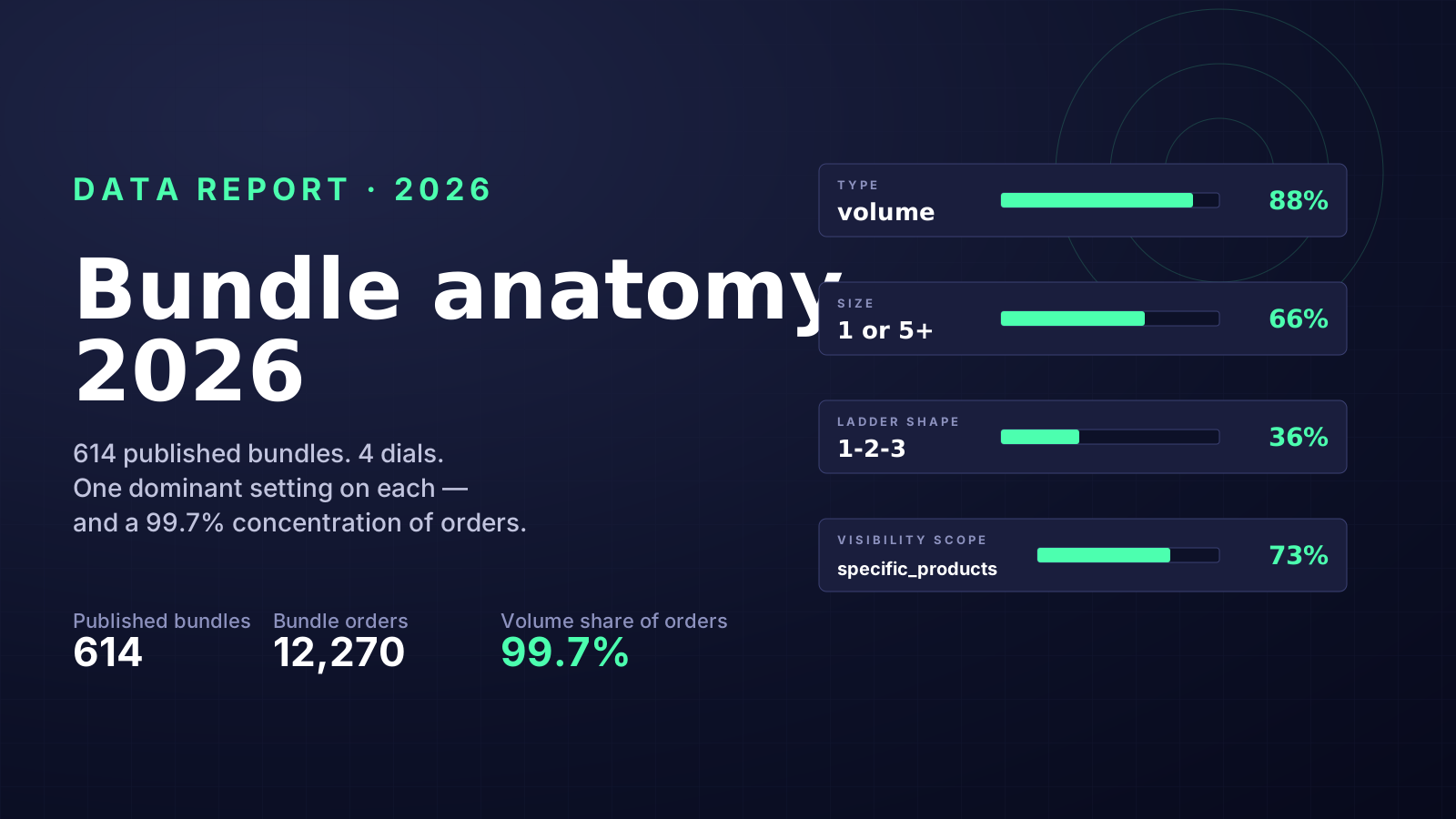
We checked. Volume bundles (which produce 99.7% of orders) follow the heatmap exactly; mix-and-match and FBT bundles have too few orders (29 and 2 respectively) to plot a meaningful per-type pattern. See the Anatomy report for why those formats are sparse.
Is the BFCM 2025 dip a real finding?
Honestly, we don’t know yet. It’s one BFCM, on a platform that was still ramping bundle-attributed order volume month over month. The 16.4% month-over-month drop from October to November 2025 is real in the dataset, but a single dip is an observation, not a pattern. If the same thing happens during BFCM 2026 we’ll have a much stronger case for it; if it doesn’t, the right takeaway is "our 2025 cohort was small and noisy", not "bundles don’t work during BFCM." Treat the dip as a flag to test for, not a rule.
Where does the data come from?
Every number in this article is computed from the production Turbo Bundles database as of 2026-05-12. 12,270 bundle-attributed orders, 16-month window. All timestamps UTC. No merchant-identifying information surfaced in this piece.